Congo’s immobilised demobilisation programme

Yesterday, various Congolese media reported the surrender of ‘Gen.’ Justin Banaloki (also known as ‘Cobra Matata’), military leader of the Ituri-based Front de Resistance Patriotique d’Ituri (FRPI). FRPI is one of the most long-standing militias in eastern Congo, created as early as in 2002 among the Ngiti community around German Katanga, allying to the Lendu-centred … Continue reading
Mapping Armed Groups in Eastern Congo – 4th Edition
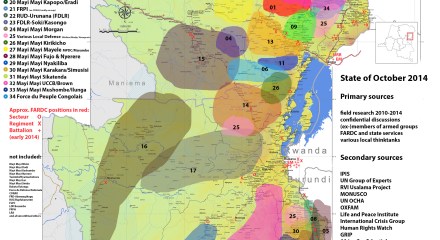
Regular readers may have noticed that this website features a mapping of armed groups in eastern Congo which is periodically updated and refined (three times a year). Today, the 4th edition of this complicated and always unfinished exercise goes online and adds to the yet existing mappings. As stated repeatedly in the lengthy disclaimer necessary … Continue reading
Argumentative techniques in the ‘conflict minerals’ debate

The Enough Project, one of the major lobbyists in favour of Dodd Frank Section 1502, has gathered 27 other signatories to co-publish another reply (after 28 Congolese Kivutian civil society organisations and PACT) to the open letter published by 72 Congolese and international stakeholders in September 2014 (For further details, see – among many others … Continue reading
Enough Project reply to the open letter on ‘conflict minerals’
The Enough Project, one of the major lobbyists in favour of Dodd Frank Section 1502, has gathered 27 other signatories to co-publish another reply (after 28 Congolese Kivutian civil society organisations and PACT) to the open letter published by 72 Congolese and international stakeholders in September 2014 (For further details, see – among many others … Continue reading
PACT reply to the open letter on ‘conflict minerals’
In the following op-ed, the NGO PACT that is involved in implementing the iTSCi traceability scheme in eastern DRC and neighbouring countries respond to the open letter on ‘conflict minerals’ published in September 2014. The following text represents the authors’ opinions only and may or may not reflect this website’s editorial line. A conflict-free … Continue reading
Masisi meanders…
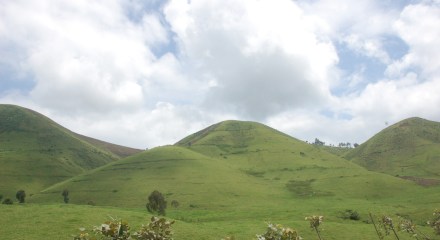
It has been relatively quiet again for a couple of months in North Kivu’s Masisi territory – at least considering the frequency and amount of reports and news out in the wires. But as often before, this goes without prejudice to the fact Masisi remains sort of an epicentre in over two decades of cyclical … Continue reading
28 North Kivu civil society organisations reply to the Open Letter
Please find below, in French, a reply to the earlier published open letter on so-called conflict minerals. It was co-ordinated by Prince Kihangi, a well-respected and experienced expert and signed by 27 other representatives. While we do not agree with all points raised and refute certain allegations, we are immensely pleased to see a further … Continue reading
Reshuffle in the Congolese army – cui bono?

On September 18, DRC’s president Joseph Kabila – shortly before heading off to the 69th session of the UN general assembly – finally announced a major round of rotations with the Forces Armés de la République Démocratique du Congo (FARDC), the country’s national army. This reshuffle features a few remarkable changes, both in personnel and … Continue reading
Peaceland – A review of Séverine Autesserre’s latest book
Peaceland – Conflict Resolution and the Everyday Politics of International Intervention A review of Séverine Autesserre’s newly published book Recently, a Congolese friend of mine taught me how to use condoms to clean your shoes before going out. On average, it takes three condoms per shoe and you come out classy within a few minutes. … Continue reading
‘Conflict Minerals’ – An Open Letter
Over a few months, we have been working on de-mystifying the discourses on so-called “conflict minerals” in the Democratic Republic of the Congo and to constructively but critically assess the policy response these discourses have provoked so far. The outcome is a letter signed by 70 Congolese and international observers. In the following paragraphs, first published with … Continue reading
 suluhu.org