Trouble all over – where is Raia Mutomboki heading to?
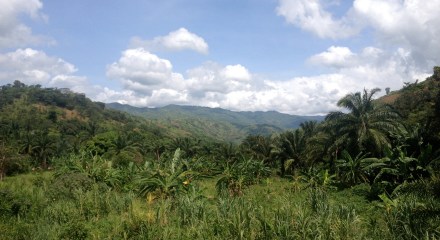
Later this year, I am going to have a peer-reviewed article in the Annuaire des Grand Lacs, but the situation on the ground develops as quickly and unexpectedly that it asks for a current overview. In particular the set-up of this ‘franchise’ (as Jason Stearns coined it) presented in this paper will already be outdated … Continue reading
Third and revised mapping of armed actors in eastern DRC

With a slight delay, a new version of the armed actors mapping has now been launched and can be found here & here respectively. At a first glance, it does not entail major changes, but a closer look shows how recent military operations (especially those involving MONUSCO’s Force Intervention Brigade) have impacted on the region’s conflict landscape. … Continue reading
MONUSCO’s Force Intervention Brigade: un état des lieux

Roughly 16 months ago (in March 2013), the United Nations has strengthened its peacekeeping mission in the Democratic Republic of the Congo – MONUSCO – with a robust force to “neutralise armed groups”. In sequence to waves of criticism MONUSCO has experienced for its passive stance during the capture of Goma by M23 troops, the … Continue reading
Elections in Congo. Yes, but which, when, and how?

Amidst the publication of a (partial) electoral calendar by Abbé Malu-Malu, head of DRC’s Commission Nationale Eléctorale Indépendante (CENI), discussions over the country’s upcoming round of polls once more flared up. On this issue, Kris Berwouts and Manya Riche have provided a nice detailed backgrounder for African Arguments this week. In general, most of the … Continue reading
Le massacre de Mutarule – Analyses préliminaires
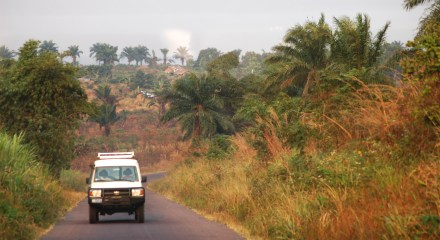
(avec Josaphat Musamba Bussy) Représailles contre les voleurs des vaches, règlement des comptes, ou haine inter-ethnique ? La journée du 7 juin 2014, le territoire d’Uvira assiste à un massacre des congolais plus de 30 personnes, certains fusillés, mais la plupart hachées comme des bêtes sauvages, à des incendies des maisons alors qu’ils étaient en … Continue reading
The FDLR demobilisation gamble reloaded
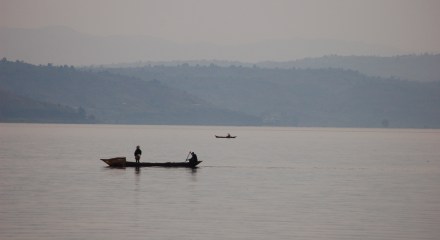
With apologies for intermittent posting over these months, a few musings on the current FDLR situation with demobilisation ceremonies happening in both Kivu provinces. On 30 May and 9 June, respectively, FDLR organised the demobilisation of a larger number of combatants in Kateku/Buleusa (Walikale territory, North Kivu) and Kitogo (Mwenga territory, South Kivu). The locations roughly … Continue reading
Seeking Justice in DR Congo’s Conflict: Can War-Crimes Trials Overcome Violence and Build the Rule of Law?
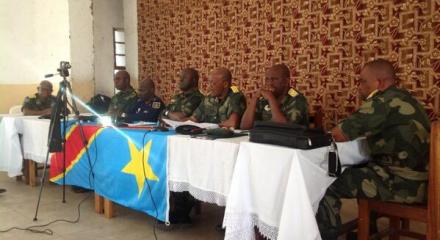
Guest post by Milli Lake (© Milli Lake) On 20th November, 2012, over 130 women and girls in eastern DR Congo were raped and sexually assaulted by members of the Congolese armed forces. The incident occurred after hundreds of soldiers from the national army were driven out of the provincial capital of Goma by the … Continue reading
How John Kerry could help bring peace to Congo (…by questioning constructed and patchy arguments)
Once more, a disingenuous op-ed on eastern Congo comes up with a brittle bricolage of little evidenced clichés. On MSNBC, Mr. Prendergast and Mr. Lezhnev (for whom I have highest personal respect, which does not exclude the possibility to scrutinise their claims in a critical manner) try to give advice to the John Kerry and … Continue reading
Understanding conflict in resource-rich post-colonial states
Understanding conflict in resource-rich post-colonial states The need to overcome simplistic narratives based on natural resource exploitation (first published at African Arguments / written with Joschka Havenith of Cologne University) Diamonds and Rubber in Sierra Leone, oil in Angola and Sudan, tantalum and gold in the Democratic Republic of the Congo, copper in Zambia, the … Continue reading
Reconfiguring the state in eastern DRC: fixing the unfixable?

(first published on openDemocracy on 3 April 2014) Two decades on from the Rwanda bloodletting, conflicts still simmer in neighbouring DRC. While their success remains mixed, international agendas of state- and peace-building heavily impact on everyday life and the ‘governing of the ungovernable’. Among the most visible examples, the UN stabilisation agenda through its peacekeeping mission … Continue reading
 suluhu.org