Recent developments around Raia Mutomboki

Amidst military reshufflings and changes in eastern Congo’s security topography, the so-called ‘angered citizens’, Raia Mutomboki, remain one of the most complex and least understood armed configurations across North and South Kivu. Academic literature is almost non-existent and also other analyses are scarce good, leading to the ironically sad fact that an academic journal could permit … Continue reading
Kinshasa on the verge of…what exactly?
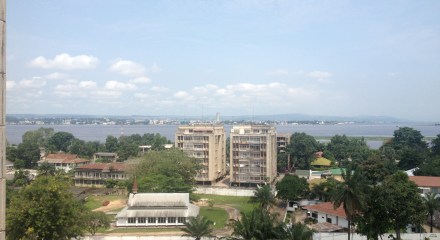
Just a jot before a rather tumultuous but evenly promising 2013 should have ended in the Democratic Republic of the Congo (DRC), a series of mysterious events shatter the country’s capital Kinshasa, as well as a few major cities across its provinces, including Lubumbashi, Kindu, and other places to be confirmed. In Kinshasa, a lightly … Continue reading
Many hitches ahead for Congo’s new DDR. Time to get over them.
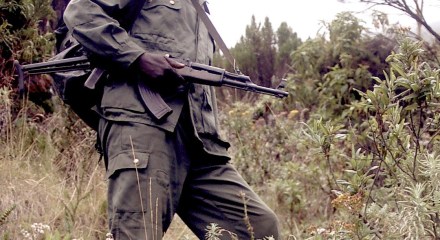
On Boxing Day, the Congolese government has officially unpacked its new Disarmament, Demobilisation, and Reintegration (DDR) approach. A cabinet meeting presided by Prime Minister Matata Ponyo has adopted the “Plan Global de Déarmement, Démobilisation et Réinsertion”, nicknamed DDR III because it is the third nation-wide approach in that regard. It is worth a while to have … Continue reading
Finally good news? What militia surrenders mean for eastern Congo

A few days ago, I have argued in this piece that M23’s demise has not entrenched automatism in appeasing conflicts across the Kivus. While it can be filed as a first success in lowering armed conflict in the region, key protagonists must maintain their vigilance and – with a more political and diplomatic focus – continue … Continue reading
With M23 off the game, will other armed groups demobilise?

(This analysis has first been published by African Arguments) Obviously, there is a lot of stuff going on in terms of disarmament and demobilisation of armed groups since M23’s surrender two weeks ago. While the situation around Makenga’s rebellion remains unclear – most of the état-major and the rank and file seem to be under … Continue reading
No more M23. The end of an era? And what’s next?

Few hours after the first rumours (initial public source seems to have been North Kivu governor Julien Paluku) announced the capture of Runyoni and Cyanzu by UN-backed FARDC troops (Mbuzi, the third hill under M23 control during the last week has been taken some 24-48 hours before). On November 5 early in the morning, the … Continue reading
Amani Itakuya. Introducing an essay series on peacebuilding in the Congo
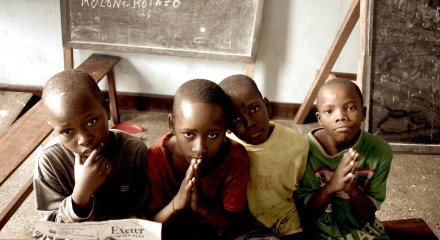
After some earlier announcements, the planned essay series on peacebuilding will start in a few days (i.e. Thursday or Friday this week). For some time, this site will feature a new, different short pieces approaching the topic from a unique perspective. Amani Itakuya means “peace will come” in Congo-Swahili (aka Kiingwana; coastal Kiswahili would say … Continue reading
Eastern Congo’s recent troubles: who pulls the strings, what is at stake, and why do things happen?

Considered an overview, this piece combines a wide range of events, observations, and consequent thoughts on the current situation in the eastern DRC. Focussing on M23 rebels, DRC government, and the UN mission it will also take into account main other dynamics and actors. (This article originally appeared in African Arguments, http://africanarguments.org/2013/09/05/eastern-congos-recent-troubles-who-pulls-the-strings-what-is-at-stake-and-why-do-things-happen-by-christophe-vogel/) An accumulation of events … Continue reading
The drama of post-colonial governance in contemporary African politics
Today’s global discourses feature a large variety of thoughts relating to current governance in many places in the world. In an age of globalisation and concurrent modes of governance, statehood, administration, and society organisation have emerged. The African continent, despite its massive variety of political culture and governance modes, prominently shows up as a place … Continue reading
The FDLR, a never ending curse in eastern Congo?
Discussing the Front pour la Libération du Rwanda, FDLR, is not an easy task. Not only that its history, activities, and ramifications are often opaque and controversial, also debates in academia and media usually spark fierce ideological drumming on all sides, social media being the best example. Still, many do it constantly. The recent rhetorical … Continue reading
 suluhu.org