Genocide? Religious war? The inflationary use of buzzwords in CAR’s violent imbroglio

For quite some time, I have been refraining from writing about the current conflicts in the Central African Republic. There is good reason for that, given I have never done actual fieldwork in this country. However, the recent escalation of violence has brought along a dangerous escalation of narratives, similar to that we know from … Continue reading
Finally good news? What militia surrenders mean for eastern Congo

A few days ago, I have argued in this piece that M23’s demise has not entrenched automatism in appeasing conflicts across the Kivus. While it can be filed as a first success in lowering armed conflict in the region, key protagonists must maintain their vigilance and – with a more political and diplomatic focus – continue … Continue reading
Big Victory as M23 surrenders, but not an End to Congo’s Travails

This analysis was first published on the International Peace Institute’s Global Observatory at: http://www.theglobalobservatory.org/analysis/617-in-drc-one-militia-m23-down-49-more-to-go.html This week, almost a year after the March 23 movement (M23) briefly occupied Goma in eastern Democratic Republic of the Congo (DRC), a series of joint operations between the Congolese army and the UN peacekeeping mission’s intervention brigade finally led to adecisive victory over the rebel … Continue reading
The surrender of Sultani Makenga [a vague sketch]

As current affairs continue to move at fast pace, the ongoing Amani Itakuya series on peacebuilding again needs to be disrupted – following one of my favourite slogans: Kwa kujenga amani, inabidii kusikia vita (To build peace, one must understand war). Throughout the day (November 7), newswires and analysts have outdone themselves with reports on … Continue reading
No more M23. The end of an era? And what’s next?

Few hours after the first rumours (initial public source seems to have been North Kivu governor Julien Paluku) announced the capture of Runyoni and Cyanzu by UN-backed FARDC troops (Mbuzi, the third hill under M23 control during the last week has been taken some 24-48 hours before). On November 5 early in the morning, the … Continue reading
Amani Itakuya. Introducing an essay series on peacebuilding in the Congo
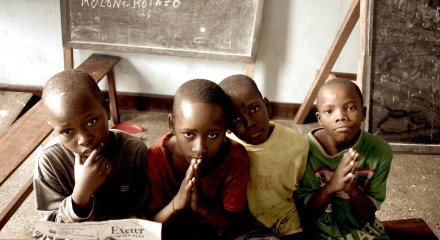
After some earlier announcements, the planned essay series on peacebuilding will start in a few days (i.e. Thursday or Friday this week). For some time, this site will feature a new, different short pieces approaching the topic from a unique perspective. Amani Itakuya means “peace will come” in Congo-Swahili (aka Kiingwana; coastal Kiswahili would say … Continue reading
Eastern Congo’s recent troubles: who pulls the strings, what is at stake, and why do things happen?

Considered an overview, this piece combines a wide range of events, observations, and consequent thoughts on the current situation in the eastern DRC. Focussing on M23 rebels, DRC government, and the UN mission it will also take into account main other dynamics and actors. (This article originally appeared in African Arguments, http://africanarguments.org/2013/09/05/eastern-congos-recent-troubles-who-pulls-the-strings-what-is-at-stake-and-why-do-things-happen-by-christophe-vogel/) An accumulation of events … Continue reading
Tricky limbo in eastern Congo
Tough times for the MONUSCO Force Intervention Brigade. Put up by the UN Security council’s latest mandate almost half a year ago, this offensive arm of the largest peacekeeping mission worldwide is tasked to “neutralise” armed groups in eastern Congo. A daunting job, not least because the latter are at an estimated number of 50 … Continue reading
North Kivu braces for potential UN-armed group clashes
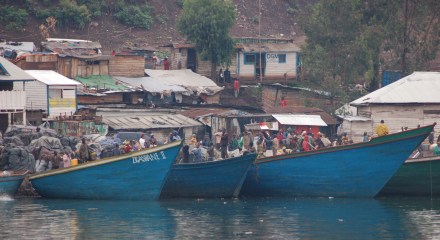
(appeared first on 2 August 2013 at IRIN) A UN ultimatum for armed groups around Goma, capital of the Democratic Republic of Congo’s (DRC’s) North Kivu Province, to disarm, expired on 1 August and a security zone has been set up around the city. Goma is calm, but civilians, aid agencies and NGOs wait nervously … Continue reading
The drama of post-colonial governance in contemporary African politics

Today’s global discourses feature a large variety of thoughts relating to current governance in many places in the world. In an age of globalisation and concurrent modes of governance, statehood, administration, and society organisation have emerged. The African continent, despite its massive variety of political culture and governance modes, prominently shows up as a place … Continue reading
 suluhu.org