Des remaniements de rebelles et l’avance de l’M23 augmentent les tensions aux Kivus

L’article suivant est désormais une traduction de l’article publié le 25 juillet 2012 sur ce blog afin de répondre aux demandes les lecteurs francophones à ce sujet. La traduction est basée sur un programme de traduction qui était corrigée en suite à cause d’un manque de temps à faire une traduction manuelle. À cause de … Continue reading
“Rebel Tetris” and M23 gambits spark Kivu mayhem
Much has been happening on the ground in Congo’s Kivu provinces during the last two weeks. Hereinafter, some of the most striking visible as well as some less visible developments shall be put together. On the political level, the withdrawal of US military aid for Rwanda in consequence of UN Group of Experts interim report … Continue reading
As Goma trembles, M23 invigorates and different actors explore their options

Before beginning a new post, I kindly ask all readers to apologise for the second last post as some of the tentative statements I made therein do not seem to be confirmed until further notice. Contrarily, some connections I spoke about proved to be not that substantial and others escaped my knowledge at that time. … Continue reading
Some thoughts on the M23 addendum to the UN Group of Experts midterm report

A couple of days ago, the much anticipated addendum of this year’s UN Group of Experts (GoE) midterm report on the Democratic Republic of the Congo has been released. While the previously published report concentrated on various pertinent developments linked to the security situation in conflict prone eastern DRC as GoE reports usually do, this … Continue reading
May there be a hidden rationale for the M23 upsurge?
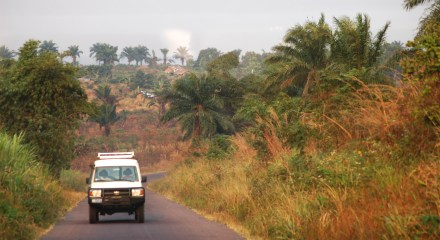
Here’s to a somewhat tentative analysis (which means: serious comment are very welcome): As M23 is moving ahead (still controlling the bordering areas between DRC, Uganda, and Rwanda while enlarging its sphere of influence up to Rumangabo) and new desertions towards the group have become known, national and international debates are gaining momentum. Kabila sent … Continue reading
“New” Disorder in Eastern DRC? Observing the potential and proliferation of conflict

The Democratic Republic of the Congo, or more specifically, its Eastern part including the provinces of North and South Kivu has again attracted attention since April. A new splinter movement of FARDC (the national army) deserters called M23 (consisting of formerly integrated ex-CNDP rebels around General Bosco Ntaganda and named after the 23rd March peace … Continue reading
A comment on Kony 2012, its repercussions, and its possible consequences

The last two weeks have been marked by an unprecedented internet activism campaign to “make Joseph Kony famous”. A viral internet video produced by US advocacy and development NGO Invisible Children (IC). As for now, it has been watched by roughly 100 million people which makes it as far as I am informed the most … Continue reading
Zum Spannungsfeld von Staatssouveränität und Responsibility to Protect (R2P) (III/III)

In Fortsetzung der Essays zu Staatszerfall und Bürgerkriegen soll nun das Spannungsfeld zwischen Souveränität und R2P dargelegt werden. Souveränität bezeichnet die höchste, nach innen und außen unabhängige staatliche Herrschaftsmacht und Entscheidungsgewalt, in anderen Worten die Ausübung eines legitimen Gewaltmonopols durch den Staat. Innere Souveränität heißt, dass die Staatsgewalt über sämtliche Hoheitsrechte verfügt und durch die Volkssouveränität … Continue reading
Einige Gedanken zur Analyse von Bürgerkriegen (II/III)

Dieses Essay steht in der Folge der bereits veröffentlichen Gedanken zum Konzept des Staatszerfalls. Staatszerfall hat als mögliche, nicht notwendige Folge den kompletten Zusammenbruch der öffentlichen Ordnung in Form von Bürgerkrieg. Bürgerkriege sind bewaffnete Konflikte die eine international anerkannte Regierung und deren Armee gegen eine oder mehrere Oppositionsgruppen stellen, die in der Lage sind, effektiven … Continue reading
Haiti, two years after the Earthquake. Challenges and prospects.

Exactly two years ago, on January 12th 2010 at 4:53 pm local time, the most devastating earthquake in modern history ravaged the small Caribbean nation of Haiti. With a magnitude of 7.1 (Richter scale) it destroyed wide parts of the country’s capital Port-au-Prince and neighbouring towns, but other cities like Jacmel or Lêogane too. With … Continue reading
 suluhu.org